
State Government Securities (SGS)
State Government Securities (SGS): A Safe Investment Option for Indian Investors
State Government Securities (SGS) are debt instruments issued by Indian state governments to raise funds for infrastructure, welfare, and development projects. For retail investors, SGS offer a unique opportunity to earn steady returns with relatively low risk, making them an attractive alternative to fixed deposits and mutual funds.
📌 What are State Government Securities (SGS)?
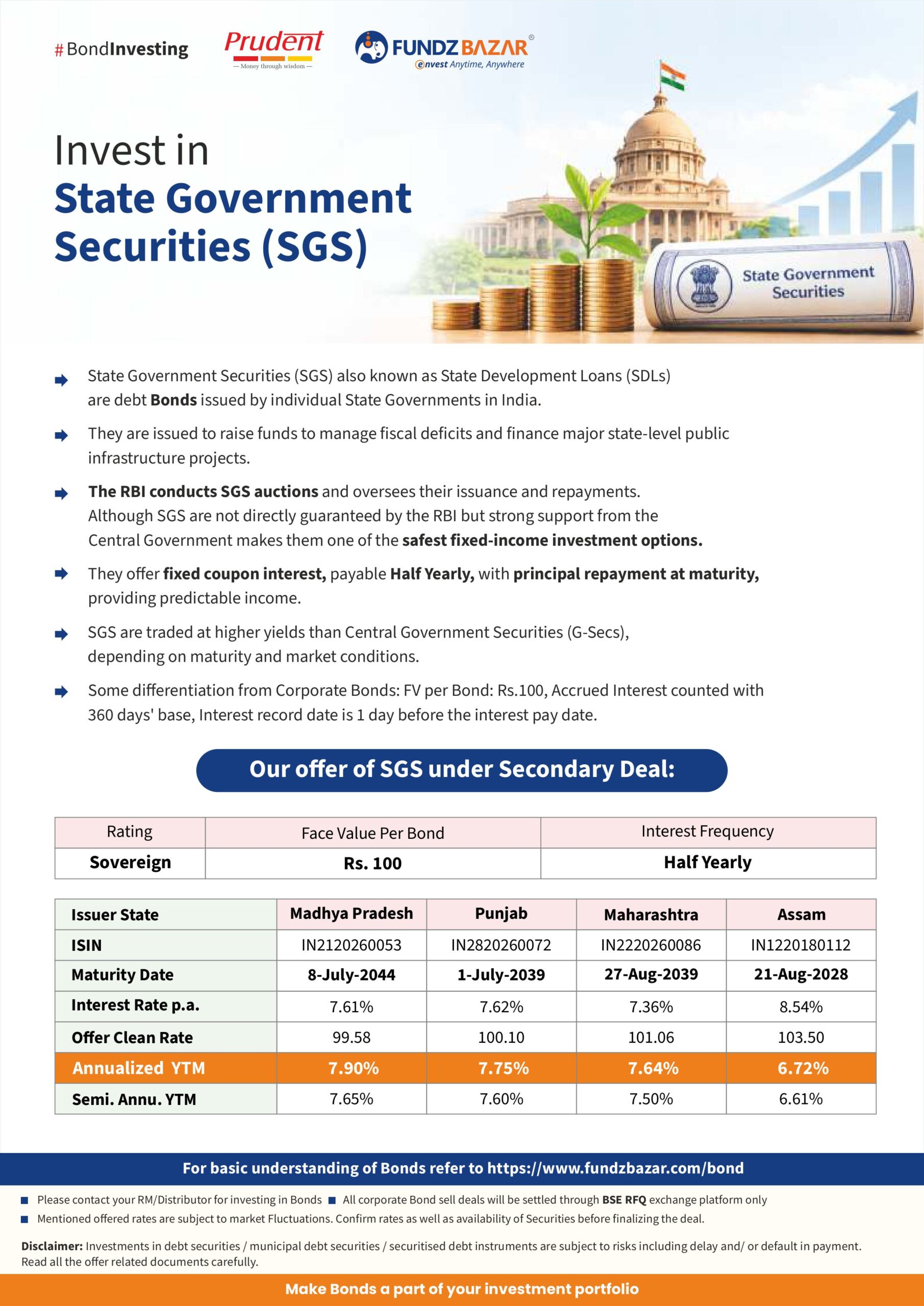
- Definition: SGS are bonds issued by state governments in India.
- Issuer: State governments, with auctions conducted by the Reserve Bank of India (RBI).
- Nature: Similar to central government bonds but with slightly higher yields due to varying fiscal health of states.
- Eligibility: Banks, institutions, and retail investors can invest. For banks, SGS count toward their Statutory Liquidity Ratio (SLR) requirements.
💰 How to Invest in SGS
- Retail Direct Portal: Investors can buy SGS directly through the RBI Retail Direct platform.
- Auction Process: Conducted on RBI’s E-Kuber system. Investors can place:
- Competitive bids (specifying yield/price).
- Non-competitive bids (for small investors, up to 10% of the notified amount).
- Minimum Investment: ₹10,000, with multiples of ₹10,000 allowed.
- Settlement: Auctions are typically settled within 2–3 days, with interest paid semi-annually.
📈 Interest Rates on SGS
- Recent Auctions (Sept 2026):
- Maharashtra SGS 2054: 7.79% yield
- Andhra Pradesh SGS 2043: 7.65% yield
- Punjab SGS 2043: 7.65% yield
- West Bengal SGS 2052: 7.76% yield
- Range: Typically 7.5%–7.8%, slightly higher than central government securities.
- Payment: Interest is paid semi-annually until maturity.
🔒 Safety of SGS
- Credit Risk: Lower than corporate bonds but higher than central government securities. Defaults are rare.
- Backing: While not sovereign (like central government bonds), SGS are considered safe due to RBI’s involvement in issuance and settlement.
- Liquidity: Tradable in the secondary market, though liquidity is lower compared to central government securities.
- Risk Factors:
- Fiscal health of individual states.
- Interest rate fluctuations affecting bond prices.
- Longer maturities carry higher risk of volatility.
⚖️ SGS vs Other Investments
| Feature | SGS | Central Govt Bonds | Corporate Bonds |
|---|---|---|---|
| Issuer | State Governments | Central Government | Corporates |
| Yield | 7.5–7.8% | 7.2–7.5% | 8–12% (varies) |
| Risk | Moderate (state finances) | Very Low (sovereign) | Higher (default risk) |
| Liquidity | Medium | High | Medium–High |
| Investor Access | RBI Retail Direct, banks | RBI Retail Direct, banks | Brokers, exchanges |
✅ Key Takeaways
- SGS are safe, government-backed instruments with yields higher than central government bonds.
- Retail investors can easily participate via the RBI Retail Direct portal with a minimum of ₹10,000.
- Best suited for conservative investors seeking steady returns, though long maturities may expose them to interest rate risks.
